 Back to reports
Med-Or Italian Foundation and Italy’s Strategic Bet on Africa
More than one in six of our online activities passes every day along the seabed of the Red Sea, off the coast of Djibouti, between Eritrea, Yemen and Somalia. Twelve submarine cables linking Europe, Asia and Africa land in this small country in the Horn of Africa. Around 18 per cent of the world’s data traffic passes through them. Seven of these cables extend all the way to Italy. If something goes wrong down there, a video call in Milan slows down just as much as one in Mogadishu.
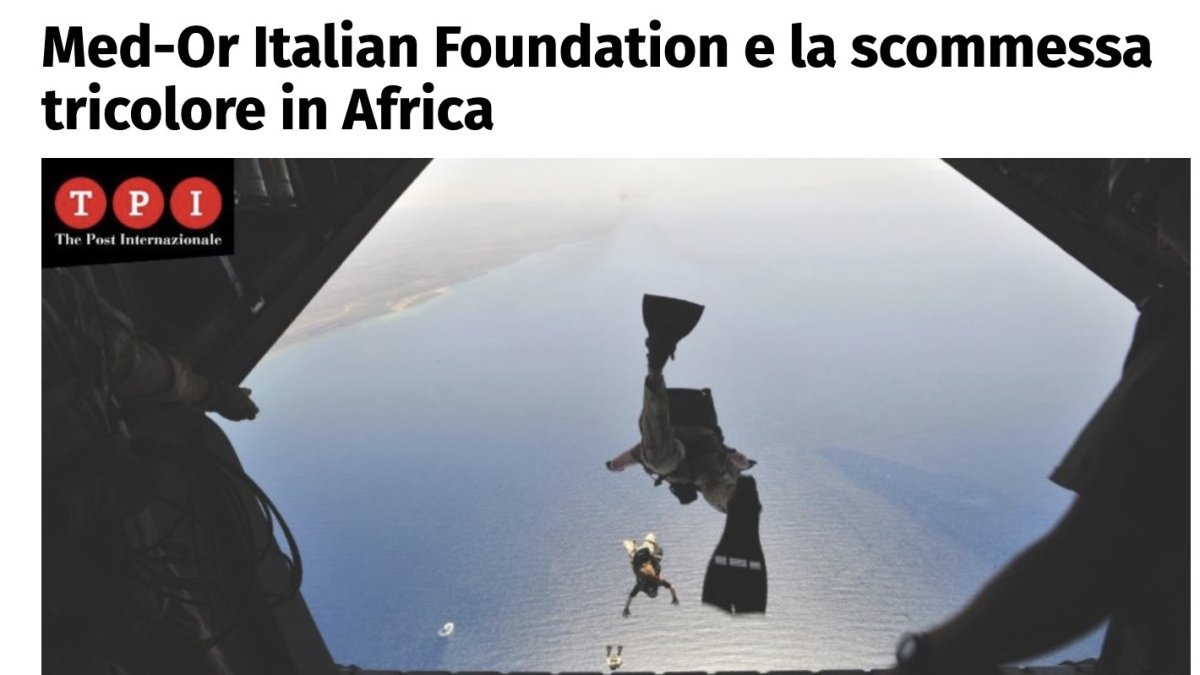
It is from this little-known fact, familiar mainly to intelligence and industry circles, that one of the Med-Or Italian Foundation’s most recent projects takes shape. The initiative aims to train Djibouti’s first unit of divers specialised in the inspection and protection of critical infrastructure, capable of operating at depths of up to 50 metres. The course, to be delivered in cooperation with the United Nations Development Programme (UNDP), is expected to begin in November. Alongside the technical modules, the programme will draw on the expertise of leading Italian industrial groups operating in the field of advanced deep-water technologies: Fincantieri, focusing on maritime security, and Sparkle, specialising in digital cables. Training will also include a module on the law of the sea, since the rules governing activities beneath the surface are far less clear-cut than one might imagine.
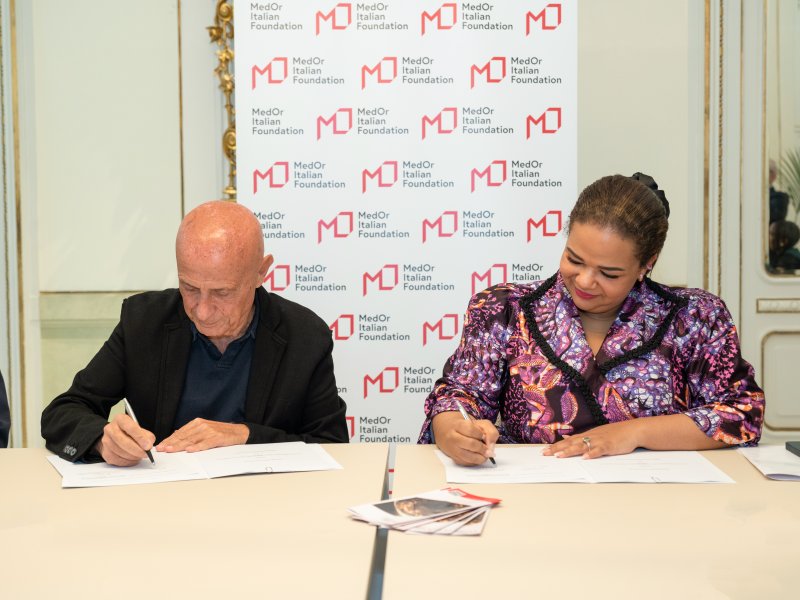
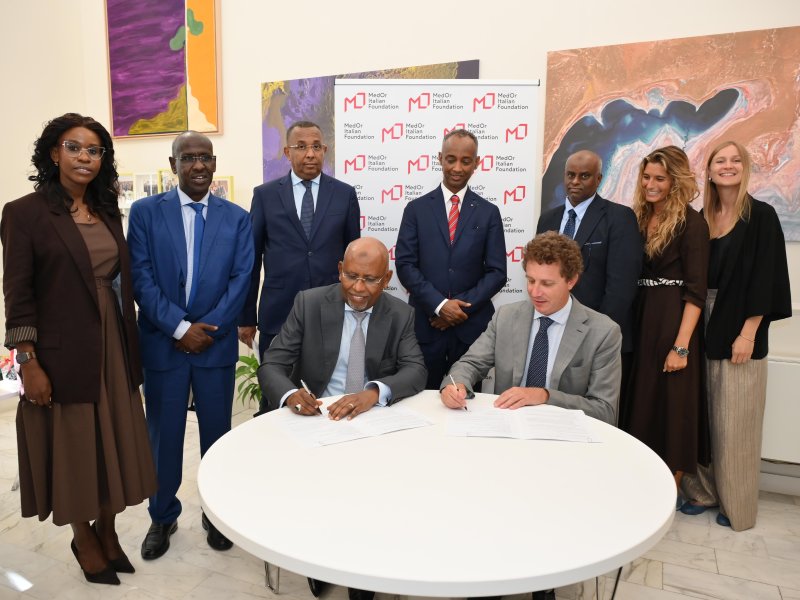
In July, in Rome, the Foundation signed a memorandum of understanding with Djibouti’s Minister of Finance. In August, during her visit to the country, Italy’s Minister of University and Research, Anna Maria Bernini, visited the cable landing station. Promoted and funded by the Italian Ministry of Foreign Affairs and International Cooperation, the project marks the first step in a new area of activity focused on submarine, digital and electrical infrastructure. The starting point is training: the aim is to strengthen Djibouti’s autonomy and operational capabilities in the underwater sector through pilot projects that leverage Italy’s industrial expertise and technological know-how.
The wider context explains both the urgency and the complexity of the initiative. In September, the Houthis captured the city of Mokha in Yemen and the island of Perim, at the entrance to the Bab el-Mandeb Strait. As a result, daily traffic to and from the Suez Canal has almost halved, falling from around 60 vessels to no more than 35. Yet the challenges are not confined to the Arabian coast or to the region’s conflicts. Whenever a submarine cable breaks, African countries have to wait for foreign repair teams, since seabed inspection, underwater intervention and subsea surveillance remain largely in the hands of companies based abroad. The divers trained in Djibouti are intended to help address precisely this gap, with Italy, through the contribution of the Foundation, playing a leading role.
Boots on the Ground
Those working at Med-Or are keen to draw a distinction: the Foundation is not a think tank. Established four years ago and chaired by former Minister of Interior Marco Minniti, it brings together some of Italy’s largest public and private industrial groups. In addition to its founding member Leonardo, its ordinary members include Enel, Eni, Ferrovie dello Stato, Fincantieri, Poste Italiane, Snam, Assolavoro and BF International. Its associate members include Cassa Depositi e Prestiti, Edison, Intesa Sanpaolo, MBDA Italia and Terna.
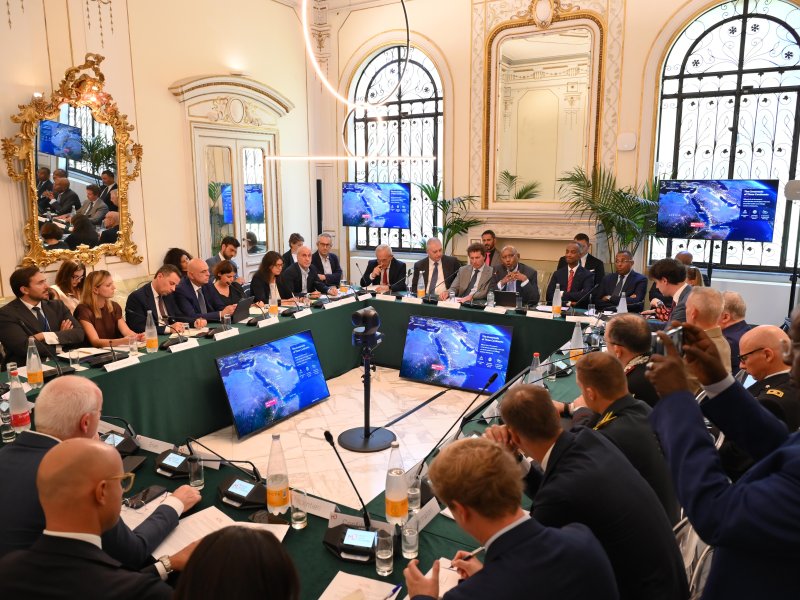
Established to bring together industrial expertise and capabilities with the academic world, the Med-Or Italian Foundation has a Strategic Committee comprising representatives of the companies mentioned above, the Office of the Prime Minister and the Ministries of Foreign Affairs, Interior, Defence, Economy, Enterprises, Agriculture, Environment, and University and Research. It also takes part in the Africa Steering Committee established by Prime Minister Giorgia Meloni to implement the Mattei Plan. The Foundation is therefore involved in translating into concrete action the Government’s strategy to bring Italian expertise, training and technology to Africa, while helping create the conditions for prosperity and alternatives to migration. Its European counterpart is the Global Gateway.
Med-Or’s initiatives are developed within this framework. The Foundation not only participates in the Africa Steering Committee and works alongside the Plan’s Mission Structure, but also implements projects on the ground funded through various institutional channels: the Italian Agency for Development Cooperation (AICS) for development initiatives; the Ministry of Foreign Affairs for training and diplomacy; the Ministry of Enterprises and Made in Italy for raw materials; and the Ministry of University and Research for academic programmes. Positioned at the intersection of industry and institutions, the Foundation seeks to carve out a role that neither an NGO nor an international organisation could fulfil on its own.
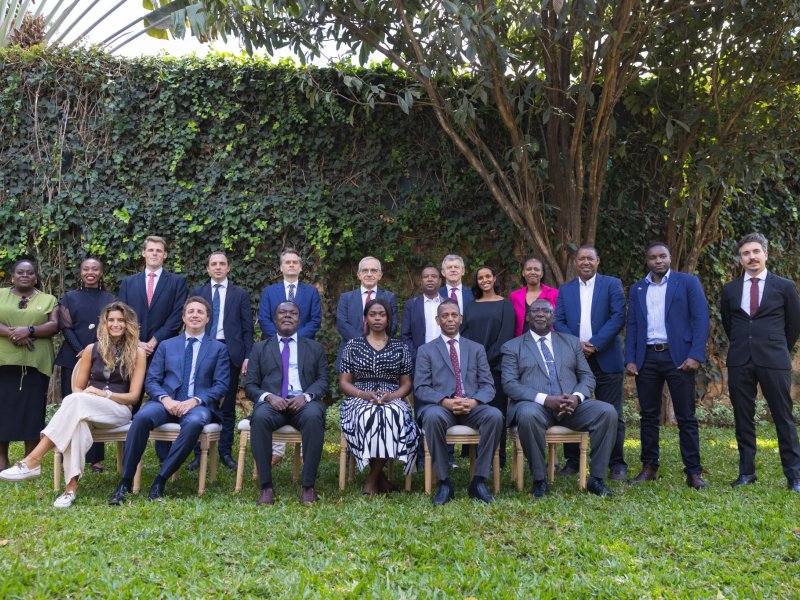
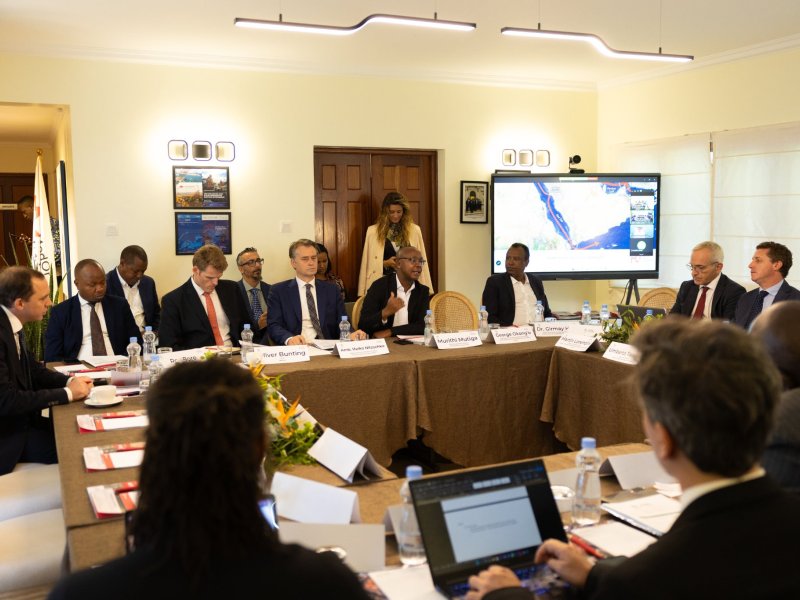
The real turning point, however, came in February, when Minister Bernini inaugurated the Foundation’s first overseas office in Nairobi’s diplomatic district of Gigiri. Today, the Med-Or Italian Foundation for Africa has a team of thirteen collaborators working between the field and Rome, led by Executive Director Umberto Tavolato, who brings more than twenty years of diplomatic and institutional experience on the continent.
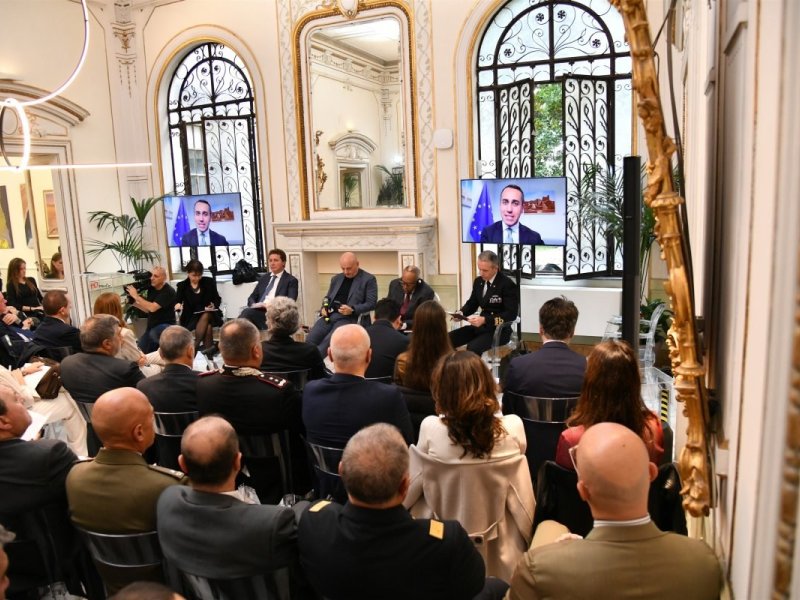
In Africa, the Foundation identifies the priorities of its partners, assesses what Italy’s industrial base can offer and works to bring the different stakeholders together. In Rome, meanwhile, its activities continue to include public diplomacy, through strategic seminars, high-level visits by heads of state – the most recent being that of Kenyan President William Ruto in April – as well as strategic communications and analysis. This includes a monthly Africa report, written in English and intended for an international readership, particularly in Africa. Yet the work the Foundation considers most distinctive is also what comes before investment. One case illustrates this particularly well.
Manganese from Zambia
For Med-Or, moving towards a strategic investment is not a single step, but a process. It involves helping the national system identify and select projects, prepare them, secure funding, assemble a consortium and ultimately bring them to implementation. This is often where most African projects come to a halt. Project preparation can be too costly for local governments and too complex for Italian companies. This is where Med-Or seeks to intervene.
The process in Zambia followed precisely this approach. After an exploratory visit to Lusaka, coordinated with the Zambian President’s Office, and a series of consultations with the mining sector, Med-Or and the Task Force of the Mattei Plan for Africa organised a closed-door seminar in Rome last December on Italy’s strategy for critical raw materials along the Lobito Corridor.
Proposals put forward by Zambian companies highlighted an opportunity to develop a new manganese mine, the first to be wholly owned by Zambian interests. The mineral is important for the automotive and battery industries. The objective is to process the ore locally, creating industries and jobs, and then export it to Western countries with the support of Italian industrial partners, rather than shipping it to China in its raw form. China is currently the leading buyer of Zambian minerals, but this model generates little added value within the country.
The next step is a pre-feasibility study. Yet the value added by the Foundation lies in the process itself, even before any concrete results are achieved: bringing these opportunities to the attention of investors, Italian and European institutions, and local partners.
From Fisheries to Agriculture
Alongside training in strategic sectors and its upstream work to develop public-private investment opportunities, Med-Or also supports development cooperation initiatives, with the backing of the Italian Agency for Development Cooperation, including through the fund dedicated to Italy’s regions. In this area, the lead role is not played by Med-Or but by the regional authorities themselves. The Foundation joins the consortia as an implementing partner, while the initiatives are shaped by its presence on the ground and its dialogue with African partners.
In Kenya’s Kilifi County, where Malindi is home to Italy’s only overseas space base and one of the largest Italian communities on the continent, the Kilifi BlueRise project is being implemented in cooperation with the Friuli Venezia Giulia Region. It aims to support local fishers, among the most vulnerable groups in the community. The project includes the rehabilitation of the Malindi shipyard, the development of a solar-powered cold chain, support for aquaculture and the provision of patrol boats, together with training for maritime rescue operations.
In Ethiopia, meanwhile, the ReSeed project, developed in Tigray in cooperation with the Abruzzo Region and the International Centre for Advanced Mediterranean Agronomic Studies (CIHEAM) in Bari, aims to revitalise agriculture following the 2020–2022 war and support the reintegration of former combatants, in line with the spirit of the Pretoria peace agreement. Unfortunately, that diplomatic framework no longer holds, following the resumption of large-scale fighting in early October. The intention is nevertheless to resume the project as soon as conditions allow, making it all the more significant for the Tigray region.
The future of the initiative remains uncertain, but the two projects in Kenya and Ethiopia share a common approach. Beyond training, they include the provision of water infrastructure in Tigray, the rehabilitation of the Malindi shipyard and the development of solar energy in Kilifi. The underlying principle is straightforward: if training programmes leave nothing tangible behind once the courses are over, skills risk being dispersed without producing lasting results.
Training Those Who Protect and Negotiate
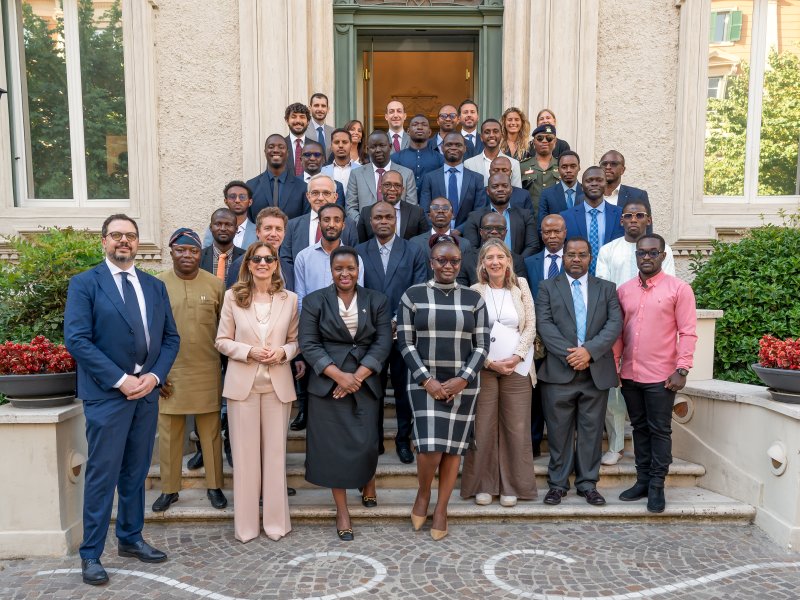
Another area of activity concerns specialised training. The CyberBridge project, completed in May in cooperation with Italy’s National Cybersecurity Agency and Leonardo, with financial support from the Ministry of Foreign Affairs, trained 30 officials from 11 African countries. Participants attended online modules, practical exercises in Leonardo’s laboratories, a session at the National Cybersecurity Agency focusing on cyber diplomacy, and a course at the Security Operations Centre in Chieti.
One detail reveals the approach adopted by the Foundation. Rather than offering a standard training package, Med-Or engaged directly with the cybersecurity and intelligence agencies of the participating countries to select candidates and tailor the course content to their needs. The objective is concrete: strengthening Africa’s ability to counter cyberattacks also makes Italy more secure.
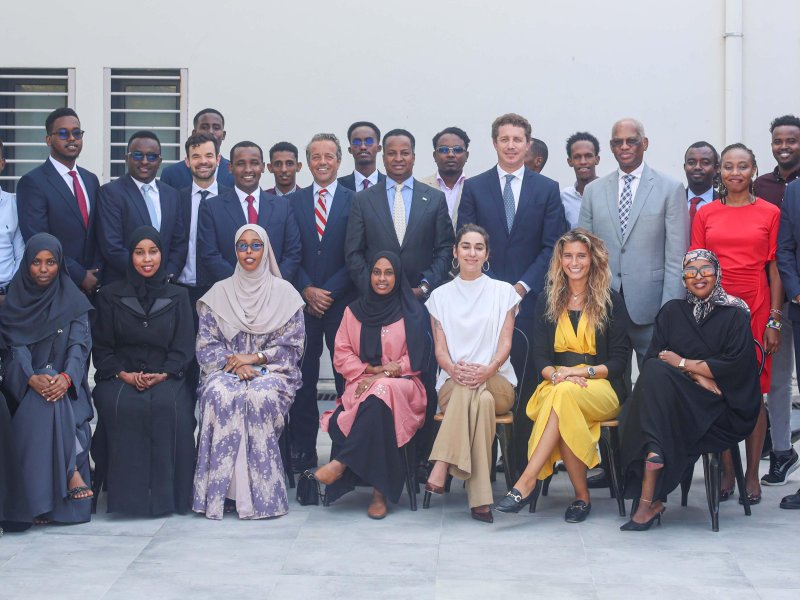
Somalia offers another example. When Mogadishu returned to the United Nations Security Council in 2025, after 54 years, the country faced a challenge. Having emerged from civil war, Somalia had invested heavily in security but much less in diplomacy. Med-Or therefore contributed to strengthening the country’s diplomatic capacity in cooperation with the United Nations Institute for Training and Research (UNITAR) and the Italian Ministry of Foreign Affairs. The programme initially trained 20 officials in Rome in November 2024, followed by a seminar for senior officials in Mogadishu. Over two years, more than 80 people have been involved, alongside dozens of briefings on international developments shared with senior Somali institutional representatives. The most recent session was held in June and focused on strategic communications, treaty law and the African Union’s peace architecture.
The stated objective is to replicate this model in West Africa, where initial contacts have already been established with Nigeria. In April, a Foundation delegation was received in Abuja by Minister of Defence Christopher Gwabin Musa and Minister of Foreign Affairs Bianca Odumegwu-Ojukwu to discuss training and capacity-building in diplomacy and security.
From Assistance to Investment
Training alone, however, is no longer enough. This was made clear in Rome in April by Kenyan President William Ruto at an event organised by Med-Or at LUISS University. Kenya, he explained, does not need more “education”, but “industrialisation”, through partnerships based on “co-production”, not “extraction”.
Every year, up to 12 million young Africans enter the labour market, while the formal economy creates no more than three million jobs. Without industrial development, Ruto warned, this gap becomes a source of instability. Creating jobs in Africa, he added, “expands markets, strengthens stability and reduces the pressures associated with irregular migration”. It also enables European industry to diversify its supply chains at a time of intensifying international economic competition.
This is the same rationale underpinning the Mattei Plan. For Med-Or, the question is therefore no longer simply what African governments and partners need, but also what Africa can offer Italy and Europe within the framework of a relationship based on mutual benefit and equal partnership.
The path ahead appears to be taking shape along three main lines: cybersecurity operational centres staffed by officials trained in Italy; new submarine, digital and electrical infrastructure to diversify Africa’s connectivity and, in turn, protect it, as envisaged in the memorandum signed with Djibouti; and data centres for artificial intelligence, so that the continent does not remain merely a consumer of technologies developed elsewhere.
It is no coincidence that, at the end of September, a new memorandum was signed with the Democratic Republic of the Congo, one of the Mattei Plan’s priority countries. The agreement provides for a framework for strategic dialogue, a series of seminars and the identification of training projects.
As with the initiatives in Zambia, the underlying objective is to give Italy’s strategy a broader European dimension by bringing the most significant projects to the attention of the European Commission, which can mobilise funding on a scale beyond the reach of Italy’s national budget alone.
The Road Ahead
A plan built around mutual interests inevitably brings together different objectives. African partners seek jobs and industrial development; Italy seeks security of supply, data security, border security, as well as new commercial and industrial opportunities. The model can work only when these objectives converge, as in the cases of submarine cables and manganese. This also makes sustained engagement with local stakeholders essential.
The scale of training programmes – often involving only a few dozen officials per course – remains limited compared with the ambitions. Moreover, many initiatives, from mining projects to data centres, are still at the feasibility-study or memorandum stage, while the path towards actual investment remains long and fraught with obstacles, as the Tigray project demonstrates.
Nevertheless, the first results are beginning to emerge. Following the cybersecurity course organised in Chieti, three countries asked Italy to explore the possibility of cooperating on the establishment of cybersecurity operational centres. In Djibouti, part of the training is being delivered by Italian industrial groups that could play a leading role in future submarine infrastructure projects linking Europe, Asia and Africa.
This appears to be the real strength of the model: maintaining a presence on the ground, reducing the costs and risks associated with the initial stages of project development, and acting as a bridge between those who have an idea and those who have the resources to finance it. Time will tell how many of these studies and training programmes will translate into investment, and who will ultimately benefit.
In Djibouti, meanwhile, a team of divers will descend to a depth of 50 metres to inspect a cable that also carries our data, while tensions in the Red Sea continue to rise. It is a telling illustration of what Italy’s presence in Africa means today – and why it matters.
You can also read the original Italian version here.