 Back to reports
The Vatican’s African Playbook: Soft Power, Demographics, and Leo XIV
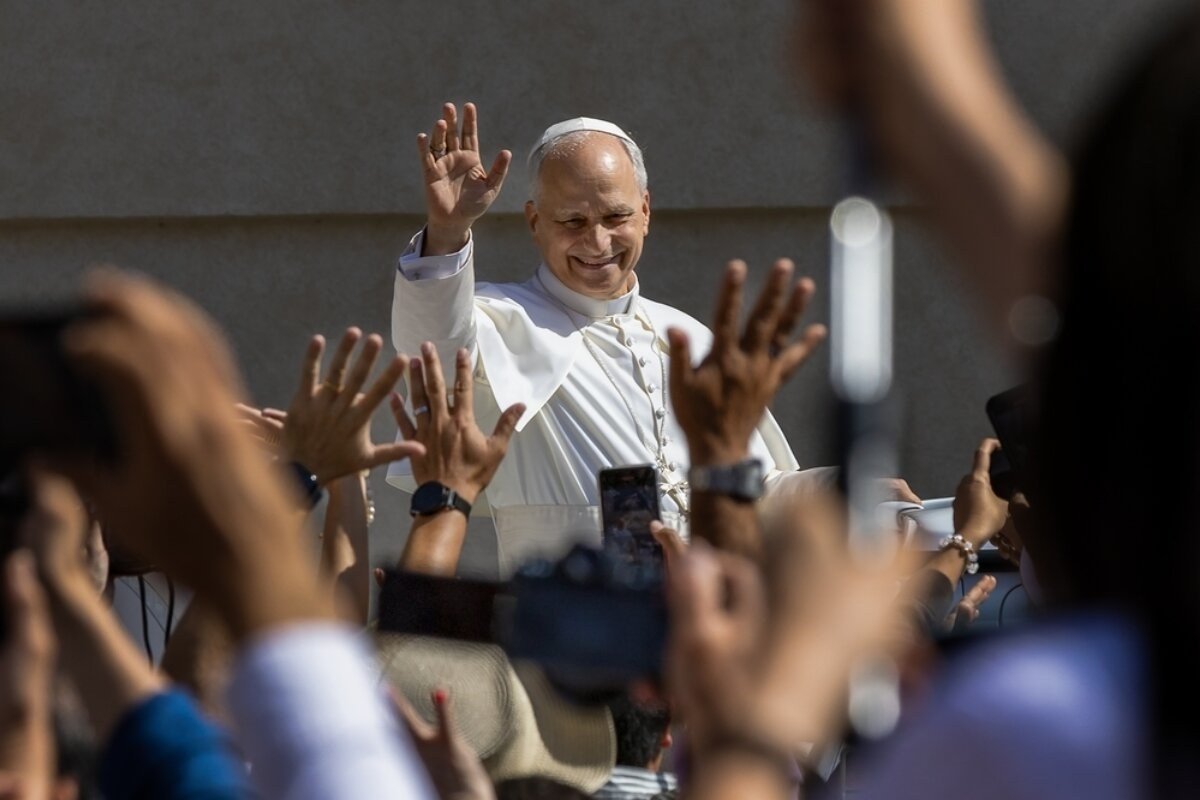
Pope Leo XIV’s itinerary in Africa—Algeria, Cameroon, Angola and Equatorial Guinea —carries a twofold significance. On one hand, it reaffirms the centrality of the "young continent" for the Holy See; on the other, it outlines the doctrinal and geopolitical thread the Pontiff has been weaving since the start of his papacy. Put succinctly: the itinerary confirms the priorities and objectives of the Prevost pontificate.
In Africa, the Catholic Church is a demographic and socio-political powerhouse. The number of faithful jumped from 185 million in 2013 to 288 million in 2024. This dynamic is not just a mere byproduct of the Africa’s population growth, but also the result of intense mediation efforts and the rollout of a social doctrine that makes the Vatican a key player for the continent’s future. What started as purely humanitarian aid has evolved into a full-blown human capital development agenda—one supercharged by Francis I and now consolidated by Leo XIV.
Take for instance the Democratic Republic of Congo. Right in the crosshairs of the US-China scramble, the Church has spent decades acting as the ultimate welfare state and political kingmaker—or de facto opposition force, when the situation demands. The CENCO (the national bishops' conference) is the country's most authoritative electoral observer. After dodging a civil war in 2016, they recently took a hard stand against President Tshisekedi’s unconstitutional push for a third term.
In inter-communal relations, players like the Community of Sant'Egidio continue to act as top-tier mediators in dormant yet persistent conflicts, such as the one in Casamance (Senegal). More recently, facing accusations of a "genocide against Christians" levelled by American President Donald Trump against the Nigerian government, figures like the Archbishop of Sokoto, Matthew Hassan Kukah, firmly stepped in to debunk these oversimplifications, safeguarding the complex system of coexistence between Muslims and Christians in the country. In short, very few geopolitical actors can boast such a deep understanding of the continent and such a capillary presence as the Vatican.
Leo XIV is doubling down on his predecessor's groundwork. Starting in Algeria with a tribute to the martyrs of independence and a historic visit to the Great Mosque of Algiers sends a clear signal: Mediterranean, interfaith dialogue is built on detente, with the right to self-determination as a core pillar.
Moving into the heart of Christian Africa, Cameroon offers the full measure of local Catholicism's mass appeal, but the agenda goes far beyond the liturgy. Here, the Pope tackles social justice and the intergenerational pact in a country where a 92-year-old President, Paul Biya, is governing a restless population with a median age of 18. It’s a stark contrast that highlights a demand for political inclusion.
The importance of proper public administration and the implementation of an inclusive social agenda take centre stage at the stop in Angola. This nation, highly strategic for the Lobito Corridor and rich in raw materials, remains plagued by extreme poverty affecting 36% of its citizens. The oration at the Shrine of Mama Muxima, the patron virgin of Angola, therefore, serves as a stark warning against the unchecked exploitation of resources and the implementation of exclusionary economic growth.
These themes peak during the stop in Equatorial Guinea, the ethical climax of the mission. By praying at the site of the 2021 Bata explosions—a disaster born of the negligent management of a military arsenal—Leo XIV turns a forgotten national wound into an indictment. It is a direct hit against state corruption, demanding justice for lives sacrificed on the altar of sheer mismanagement.
Four stops, one clear geopolitical lens. Prevost views the world as simultaneously collective, fractured, and fiercely diverse—an analytical framework that, in our current era of global conflict, applies far beyond African borders. For the Vatican, Africa is no longer the periphery; it’s a mirror. The real question Leo XIV leaves behind with this tour is pointed: who actually has the courage to face the reflection?