 Back to reports
Angola and the evolving dynamics of Europe-Africa relations
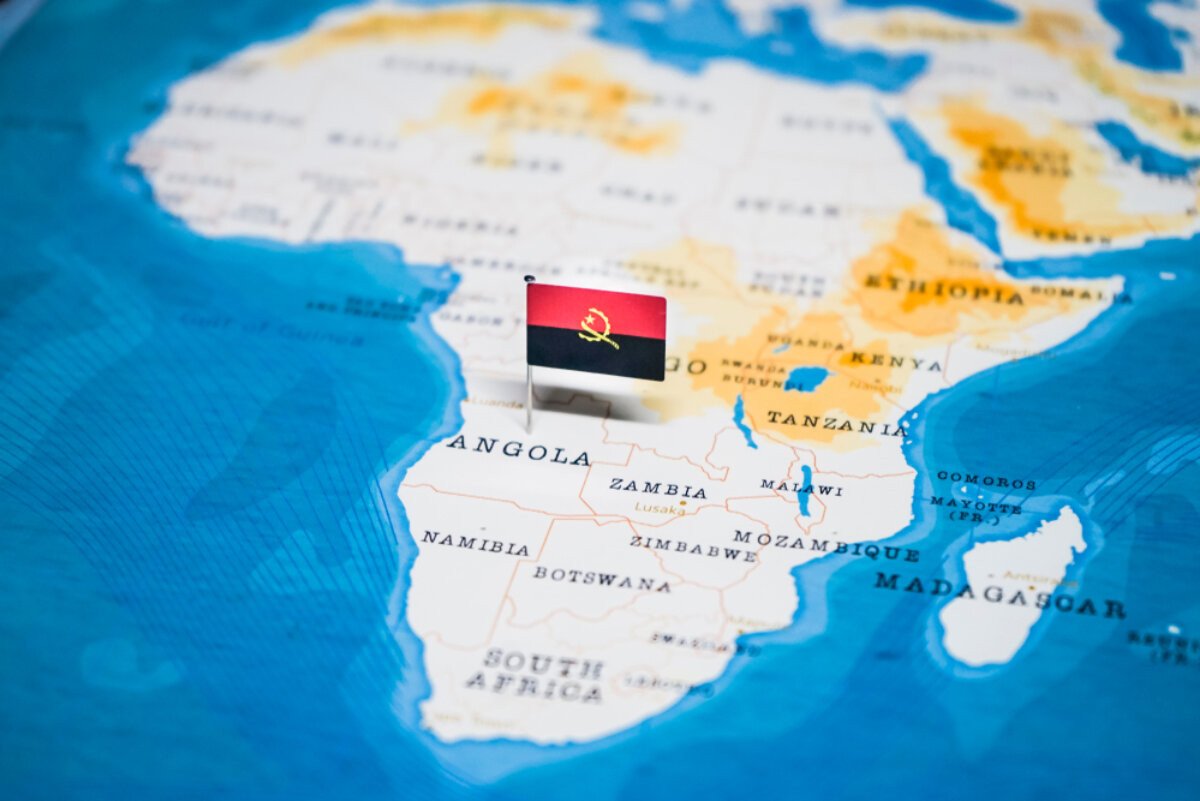
As one of the most significant countries in Sub-Saharan Africa for what concerns energy and trade, Angola has the potential to become a key strategic partner for Italy and Europe across multiple sectors.
Diplomatic relations between Rome and Luanda date back to 1976, when Italy became the first Western European country to recognize the independence of the People’s Republic of Angola, following its liberation struggle from Portugal, which began in 1961 and concluded in November 1975. Afterward, the country experienced a prolonged civil war, during which the ruling Popular Movement for the Liberation of Angola (MPLA), backed by the Soviet Union, faced the opposition of other independence movements, such as the National Union for the Total Independence of Angola (UNITA), supported by the United States and South Africa. This conflict lasted until 2002, when Angola transitioned to a presidential republic. Since then, Luanda has enjoyed relative political stability, despite a loss in support for the MPLA, whose dominance has waned in favor of its historical rival UNITA (securing 51% of the vote in 2022, compared to 81% in 2008). However, the MPLA has remained in power. The current president, João Lourenço, first elected in 2017 and re-elected for a second term in 2022, succeeded José Eduardo dos Santos, who had been in office since 1975. Lourenço’s administration has prioritized economic revitalization, improving the socio-economic conditions of the population, and combating corruption, particularly in the energy sector, the most crucial component of the national economy.
Angola is Africa’s third-largest oil producer and holds the continent’s fourth-largest oil reserves after Libya, Nigeria, and Algeria. It also possesses significant natural gas deposits. The oil and gas sector constitutes 96% of Angola’s exports and 34% of its GDP. Despite hydrocarbons are the cornerstone of the national economy, Angola has faced considerable challenges in transforming its natural wealth into widespread economic prosperity. Even after the end of its Marxist-oriented governance, which in the 1970s imposed a highly interventionist economic model, the country has struggled to develop into a competitive market economy. Currently, Luanda ranks among the twenty worst business environments globally, positioned 177th out of 190 countries in the World Bank’s annual competitiveness index. The failure to establish a robust domestic market, combined with repeated regional and international financial crises, OPEC-imposed price cuts (Angola joined OPEC in 2007 and withdrew in 2024), and a lack of strategic infrastructure and local technical expertise, have all hindered Angola’s growth prospects. For instance, despite being one of the world’s largest crude oil producers, the country imports around 80% of its refined petroleum products.
The disparity between Angola’s abundance of natural resources and its lack of economic returns is particularly evident in the province of Cabinda. This exclave, separated from Angola’s northern borders by 60 kilometers of Democratic Republic of Congo territory, holds some of the world’s largest oil deposits, especially offshore. Despite providing about two-thirds of the nation’s oil reserves, Cabinda’s population lives in extreme poverty. The region has also been a hotspot of low-intensity conflict between separatist movements, particularly the Front for the Liberation of the Enclave of Cabinda (FLEC), and the Luanda government, which has consistently maintained control over the territory.
Since 2017, the Angolan government has implemented a series of reforms aimed at revitalizing the economy by reducing its dependency on the oil and gas sector. The main goal is to attract foreign investment that will transfer technology, capital, and expertise to key sectors, such as agribusiness, where the country has significant untapped potential; mining, particularly diamonds and critical minerals; renewable energy; and infrastructure and logistics. Noteworthy is the construction of the Lobito Corridor, a project primarily financed by the United States and the European Union. This 1,300-kilometer network of road and rail connections will link Angola with the Democratic Republic of the Congo and Zambia, facilitating faster trade routes. The project could significantly improve connectivity across Southern Africa, offering an alternative to the eastern ports of the continent, where China is advancing a competing project known as the TAZARA line. If completed, the corridor would enhance the logistical importance of Angola’s ports, particularly those in Lobito and Luanda, making them more strategic for trade with North America and Europe.
The European Union has shown growing interest in Angola, with the country being one of the major beneficiaries of the Global Gateway – a project through which Brussels seeks to promote infrastructure development in developing countries, dedicating €150 billion to Africa alone. The partial funding of the Lobito Corridor is a significant example, alongside investments in numerous cooperation projects, ranging from renewable energy promotion to strengthening the agricultural sector.
As for Italy, Angola has been a significant trade partner since gaining independence, especially in the energy sector. In 2023, trade between the two nations amounted to €1.2 billion. While the oil and gas sector remains a priority due to the strong presence of Italian companies in the country, Luanda’s new economic direction presents opportunities for diversifying and strengthening bilateral economic ties across various sectors. In the context of Italy’s Mattei Plan for Africa, renewable energy, agribusiness, and the logistics and infrastructure sectors stand out as key areas for collaboration. As announced at the 2024 G7 summit, Italy will contribute €320 million to the Lobito Corridor project.
In light of the recent crisis in the Red Sea and the associated challenges of shipping supplies from Middle Eastern markets, infrastructure development along Africa’s west coast could offer a viable alternative trade route, reducing over-reliance on the Suez Canal route. An Atlantic maritime route, free from significant security risks and shorter than the route via the Cape of Good Hope, could emerge as a safer and more efficient option. Therefore, if Angola succeeds in diversifying its economy and improving its logistics sector, it could play a crucial role not only in Southern Africa but also as a strategic commercial hub for trade with Italy and Europe.